I was reminded recently of a statistic about heat and violence. That places with sustained heat over 90 degrees in the US have higher rates of violent crime during those periods than their more temperate neighbors. Heat makes it more difficult to regulate your body temperature, mood, cognitive function, digestion, etc etc. Naturally, it can make one feel unsettled.
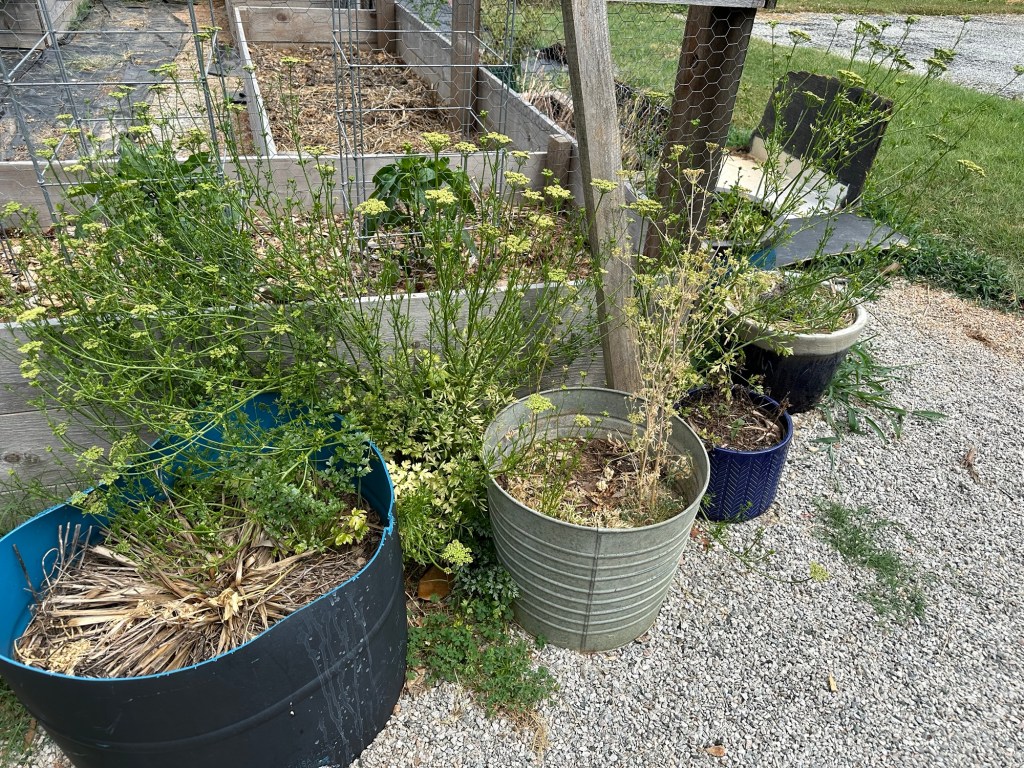
Looking out my window on this hot, hazy day (the most recent of many), I see a lot of unsettled plants. I have heard/ read many times that plants that are well established, especially those that are native to where they are planted, can withstand more stressors than non-native, non-established plantings. (Non-established in this instance means that they have not developed roots and/or the size/habit of a mature plant). I see evidence of this all over the yard today.
But vegetable gardens many times lack the benefit of being native or well established. Most of the plants currently coming up in my veggie garden grew from seed in the last 6 months. Some of them are perennials in their native land, but not here. Some are annuals no matter where they grow. How do we protect them from the effects of a heat wave, such as the one currently imposed on this part of the country?
As I plant new “babies” in the garden I consistently mulch around them. Note, this doesn’t mean mounding the mulch up against the stem- plants like to breathe and mounding can lead to a host of problems. The plants that look the least wilty have a good three inches deep mulch around them covering all bare dirt in the box and are now big enough to shade their own roots.
When I put in the raised bed garden I currently use for growing produce, I decided to invest in a cistern. This has been extremely useful during dry spells and holds enough that I have been able to water the veggie beds 5 times since the last rain with about a third remaining. Not only does this save a lot of money in water, but rain water is more easily utilized by the plants. When watering during a dry spell, it’s better to water around the base of the plant so that you’re not losing water to non-plant overspray. This is good for conservation of water and also better for the plant.
The longer I garden the more I see the benefits of some intervention. I’ve been experimenting with poly cloth in the garden this summer. I bought it originally to extend my growing season during fall/winter months. I know that many farmers use poly cloth on their hoop houses so they can control things like temperature, sun exposure and pests, so why not try it out? I have been able to grow (from seed) more tender greens using this method.
However, I have some reservations about this. Poly is made from plastic. Doctors have been finding an accumulation of nano and micro plastics in people’s colons, prostate, ovaries, lungs, etc and noting a correlation between this accumulation and the cancer they are suffering from. Using a covering of plastic over plants I plan to feed my family is obviously something that concerns me.
Clearly, unsettled vegetables in the garden makes me unsettled as well. But know better, do better gardening means that we have to be willing to evolve. To change our methods as we learn so that we can become the more resilient, survival-capable humans we will need to be to grow food in the hotter, more volatile climate that we have created. So, I’ll look for an alternative to poly cloth.
Well, that’s a depressing way to finish this up. I guess the vegetables and I are all unsettled. Here’s hoping that you stay comfortable and that your plants don’t all die. Hmm, still not sounding positive. I guess that’s all I’ve got right now. Let’s all hope for a break from the heat and some rain would be nice. There! That’s as positive as I can muster. Go forth and try not to melt!
 Yardening
Leave a comment