Mid summer, post golden potato harvest, I decided to try my hand at sweet potatoes. I had the space recently occupied by the harvested golden potatoes, so why not, right?
First hurdle, what to plant. Quickest way to grow sweet potatoes is from slips. If you have ever bought whole sweet potatoes and then forget you bought them for any appreciable amount of time, you know that they start to grow these sprouts off the parent potato complete with a stem and roots. Off the side of the potato. It’s pretty freaky looking actually (nature is awesome, yo). It takes up to 4-6 weeks to grow slips once you do the avocado seed thing you did as a kid (any people raised in the 80’s know alllll about this. Also, did anyone expect to actually grow an avocado TREE in their yard? This is unlikely to be a positive experience in NC). Basically, you submerge half the potato in water and wait for roots to form.
I had about 20 slips off of one potato in two weeks of growth. Good enough! It’s more fun if it’s experimental, right? The roots were not as long as suggested by the knowledgeable people on the interwebs, but I started late and was anxious to give them time under ground before fall. I planted them all and let nature do its work.
First of all, did you know that sweet potatoes grow up to 20 ft vines? Also, that’s not one spindly vine per plant. That’s many many vines per plant. It looked something like this.
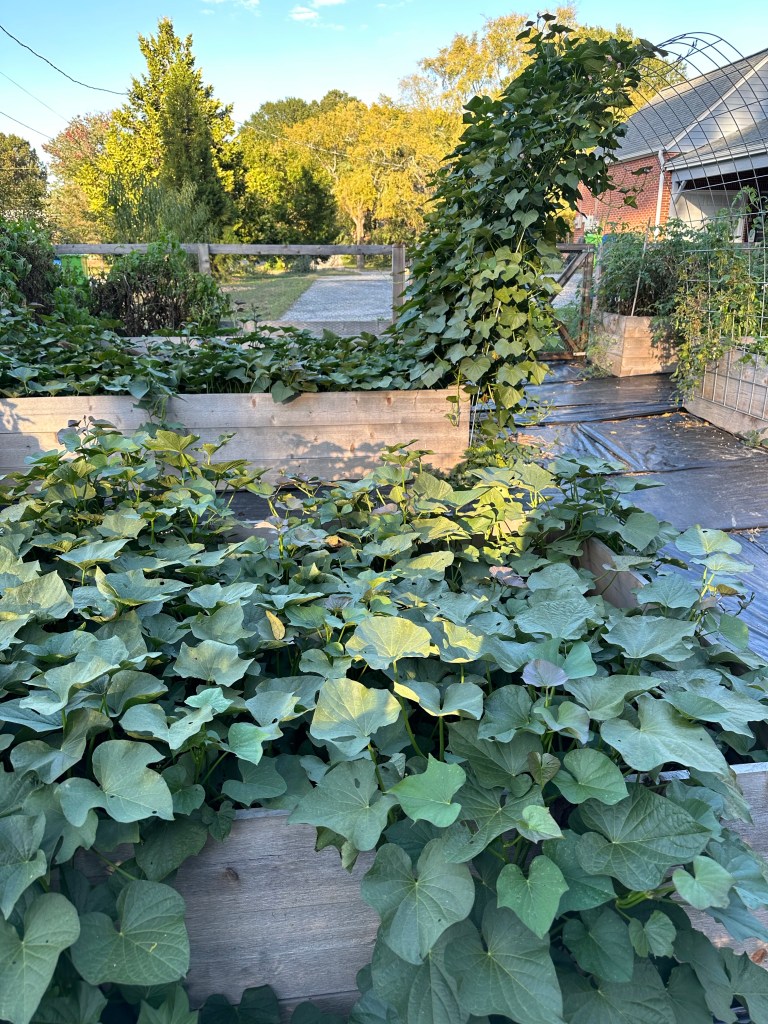
So, definitely fine that it was only two weeks of growth on my windowsill.
Similar to other potatoes, you harvest sweet potatoes when the leaves start to yellow. This is a sign that the chlorophyll is being sucked (my word, not the plant expert term) back into the root to hold for the following season of growth. You cannot eat green potatoes. It can make you really sick, so we don’t want the sucking of chlorophyll to happen. My plants had not started yellowing, but we had a couple of early frosts here in the piedmont of NC and the vines all wilted. Root tubers don’t like this, so it was time to dig up the harvest.
Here’s where the fun starts. First step was removing all the vines. This was understandably upsetting as there is not anything to do with the vines but compost them. Allll that hard work (haha, you know it really wasn’t hard at all). Turns out that I wasn’t the only one who thought sweet potatoes would be a fun experiment. We had a large den going on under the dirt, with tunnels and lots of entrances. Not sure which garden digger we had fattening up for the winter, but they got quite the haul.
And yet, our harvest was substantial. Definitely more than my family will eat over the next year. I’ll have to sneak it into all kinds of things.
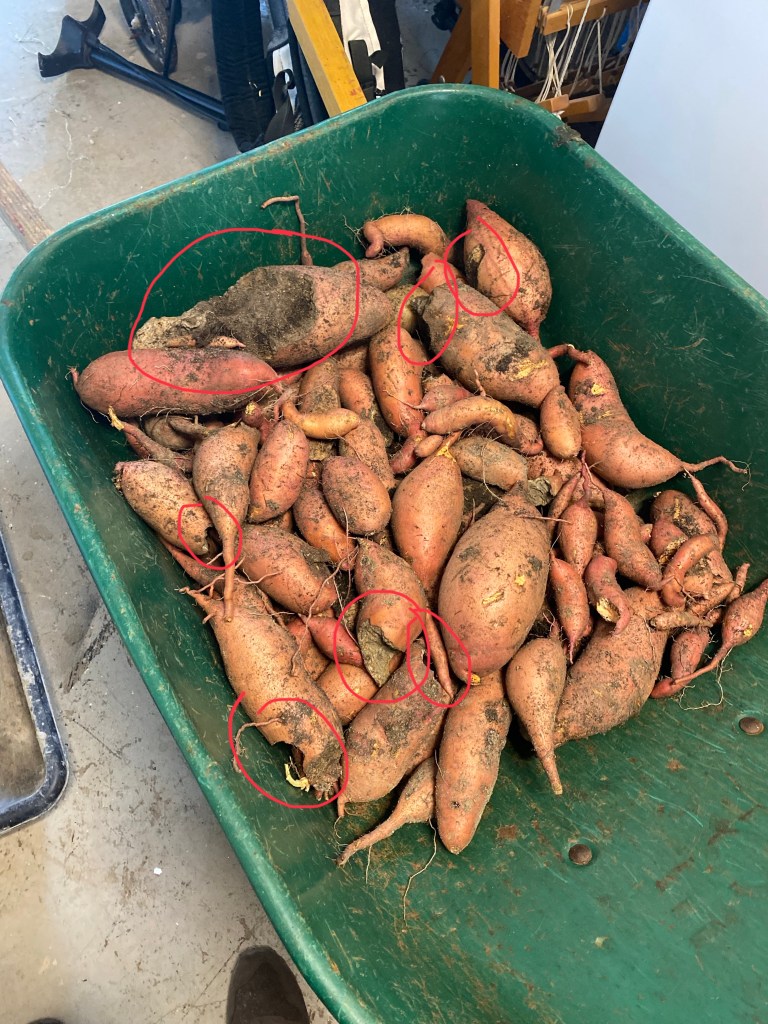
I was reminded about this today when I decided to roast up some veggies for my lunch. I pulled out a large, half eaten potato and thought, “All part of the experiment.”

I had brushed off only the big chunks of dirt because the suggestions for potatoes involve trying really hard not to rub off the skin before storing as this is what keeps them from rotting. I decided the dirt was aiding in that, so I didn’t rub it off. Now the question is, did it do its job?
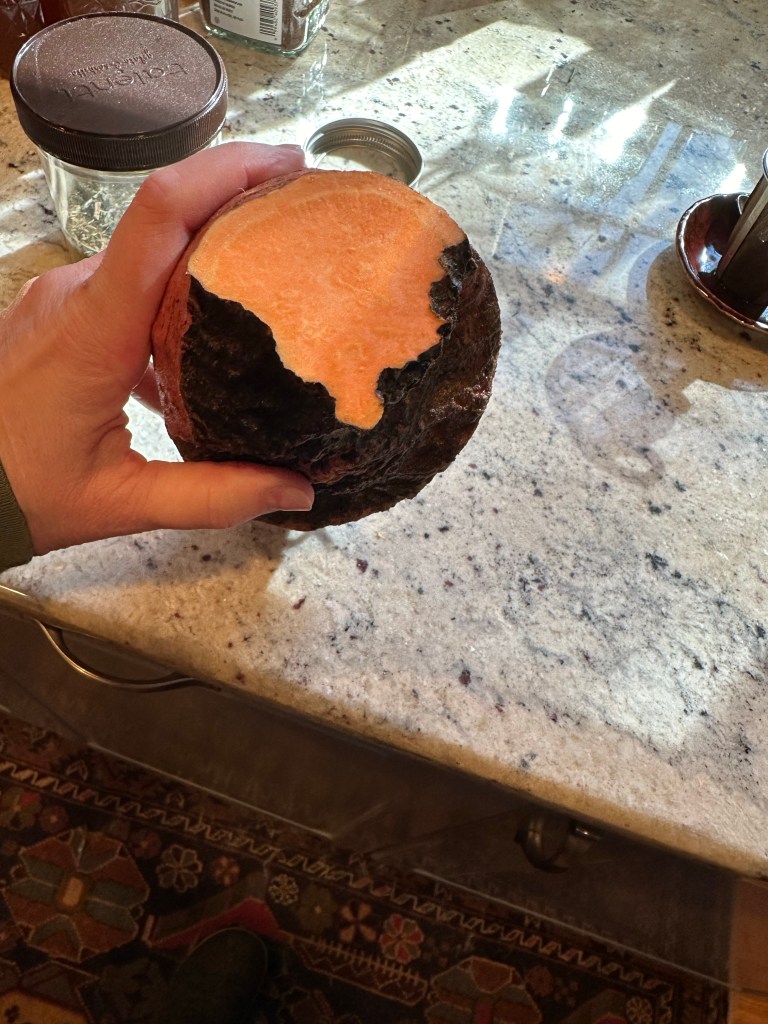
The answer is a resounding, “YES!” How satisfying to know that you don’t have to only keep the best of everything. That perfect is not the only kind of harvested food worth keeping. And that sharing your harvest with the creatures who eat all the grubs out of your garden is a fair trade. So go ahead and have your munchies, little rodent thieves. There’s enough for all of us.
 Yardening
Leave a comment